SaaS product development · Web & mobile
Software that earns its place every month
Aura Logic Systems designs, builds, hosts, and improves subscription software for two audiences: teams inside growing businesses and customers using products in everyday life. Both begin with a real recurring need — and both are engineered to remain useful long after launch.
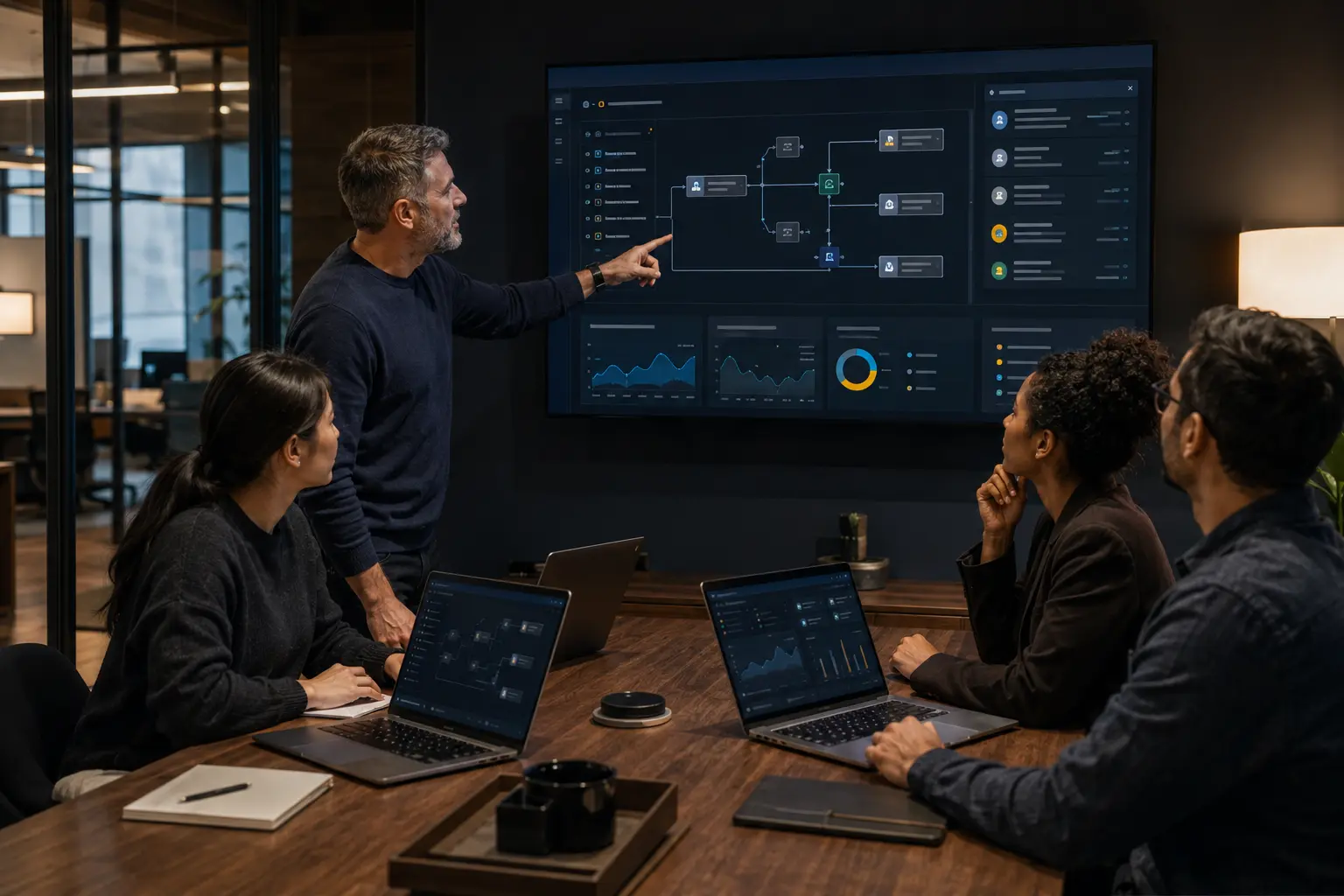
Internal SaaS for SMBs
A maintained operating system, not another software purchase
Internal SaaS products are secure cloud applications that a small or mid-sized business licenses for ongoing use. Instead of purchasing a static build and becoming responsible for every update, the business leases access to software that is hosted, monitored, supported, and improved as part of the relationship.
The recurring fee funds more than access. It supports dependable infrastructure, backups, security maintenance, integration care, issue response, compatibility work, and a deliberate release cycle. That gives the product a practical way to keep pace with changing workflows, teams, regulations, and customer expectations.
The commercial agreement defines seats or usage, service scope, support expectations, data handling, and ownership clearly. In a typical arrangement, Aura Logic Systems retains and maintains the software platform while the business retains its operational data and receives licensed access to the agreed product and configuration.
Why businesses lease SaaS
The subscription supports the whole product lifecycle
A SaaS lease aligns the cost of software with continued access, maintenance, and improvement instead of treating launch day as the finish line.
- 01
Access
Authorized users reach the application securely from the office, the field, or another location without maintaining local servers.
- 02
Reliability
Hosting, monitoring, backups, and deployment practices are maintained as an operating responsibility.
- 03
Evolution
New rules, integrations, reports, and carefully selected AI capabilities can be introduced through managed releases.
- 04
Alignment
Plans can reflect seats, locations, modules, or usage so the system grows with the organization.
The exact license, service level, data rights, portability, and product ownership terms are documented before development begins.
Practical internal products
Built around the work your team performs every day
The strongest internal SaaS product removes repeated friction, establishes one reliable source of truth, and makes the next action obvious.
- 01
Operations platforms
Coordinate jobs, tasks, approvals, schedules, capacity, and exceptions in one governed workspace.
- 02
CRM and revenue systems
Connect lead capture, qualification, follow-up, proposals, pipeline visibility, and customer history.
- 03
Client and vendor portals
Give customers, partners, and suppliers a secure place to submit requests, exchange documents, and see status.
- 04
Inventory and field systems
Track stock, purchasing, assets, dispatch, inspections, service records, and work completed away from the office.
- 05
Knowledge and training hubs
Turn SOPs, onboarding, role guidance, and internal knowledge into a maintained operating resource.
- 06
Intelligence and reporting
Unify operational data, surface bottlenecks, monitor KPIs, and give leaders a reliable view of the business.
Business benefit
Why the model works for growing companies
Predictable investment
A recurring license turns a large, uncertain technology purchase into a planned operating cost tied to active use.
Continuous improvement
The product can evolve through scheduled releases, new integrations, usability refinements, and changing business rules.
Less technical burden
Hosting, monitoring, backups, deployment, and routine maintenance are handled as part of the service model.
Faster adoption
Teams receive a focused product configured around familiar roles and workflows instead of a sprawling suite they must reshape alone.
Scalable access
Seats, locations, modules, usage, and storage can expand as the organization grows without rebuilding the underlying system.
Measurable value
Adoption, cycle time, exceptions, throughput, and other agreed outcomes can be reviewed to guide the next improvement.

Customer-facing SaaS
Useful digital products for everyday customers
Aura Logic Systems also creates subscription web applications and mobile applications for retail customers. These products are designed around recurring consumer needs: managing money, improving health, planning travel, organizing life, learning, booking services, or staying connected to a trusted community.
A customer SaaS product must do more than function. It needs a clear reason to return, intuitive onboarding, accessible interfaces, reliable performance, thoughtful notifications, secure accounts, transparent billing, and respectful use of personal data. We design the product experience and the operating systems behind it together.
Depending on the market, the product may use paid subscriptions, tiered plans, freemium access, memberships, or business-sponsored access. We help define a model that fits the value delivered rather than forcing every idea into the same pricing structure.
Retail product categories
A broad field of useful possibilities
We can create focused SaaS products across consumer markets where software can deliver recurring, measurable value. Gaming products are outside this offering.
- 01
Personal finance and budgeting
- 02
Investing education and financial wellness
- 03
Health, wellness, and care coordination
- 04
Fitness, movement, and habit coaching
- 05
Travel planning and itinerary management
- 06
Lifestyle and personal organization
- 07
Productivity and time management
- 08
Education, tutoring, and skill development
- 09
Career development and job-search tools
- 10
Real estate, renting, and home management
- 11
Food, nutrition, and meal planning
- 12
Shopping, subscriptions, and loyalty
- 13
Automotive ownership and mobility
- 14
Events, reservations, and experience planning
- 15
Creator, membership, and community platforms
- 16
Family, caregiving, and household coordination
- 17
Pet care and service coordination
- 18
Sustainability and resource tracking
Product path
From a promising idea to an operating product
We treat SaaS as a continuing business system: product strategy, software engineering, infrastructure, customer experience, support, and improvement working together.
How we build
Five connected stages
- 01
Validate the need
Define the user, the recurring problem, the competitive context, and the reason the product deserves ongoing use.
- 02
Design the model
Shape roles, journeys, features, subscription tiers, data rules, success measures, and the minimum viable release.
- 03
Architect the system
Plan the application, cloud services, integrations, billing, notifications, analytics, privacy, and security boundaries.
- 04
Build and launch
Create the responsive web application and, where the market requires it, companion mobile applications for iOS and Android.
- 05
Operate and improve
Monitor reliability and adoption, support users, maintain integrations, and plan releases around evidence rather than guesswork.
We can begin with discovery and a focused first release, then expand only when adoption and evidence justify the next investment.
Have an internal workflow or customer product worth turning into SaaS?
Bring us the recurring problem, the people it affects, and what success should look like. We’ll help determine whether SaaS is the right model and define the smallest credible path to launch.